
Review
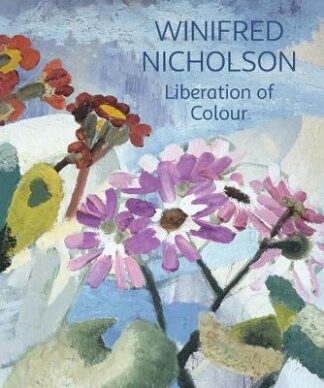
Book review by Steve Matthews of BookendsEdinburgh Weavers, one of the most important innovators in twentieth century design, should have been called Carlisle Weavers. James Morton of Morton Sundour in Denton Holme in Carlisle set up the business in Edinburgh in 1928 to develop new, original designs. Within four years it moved to Carlisle, and there, under the inspired direction of his son, Alastair, it produced designs that transformed the appearance of homes and offices. Alastair was in his twenties and became close friends with some of the great artists of the time – people like Ben Nicholson, Barbara Hepworth and Naum Gabo. There was also Winifred Nicholson, who lived at Bankshead, near Lanercost. Morton was a near neighbour in his own strikingly modern house at Capon Tree, Brampton. In 1937 Morton produced a series of textiles based on Constructivist designs by these artists and others. It was something radically new, taking design from representation into abstraction. A design by Ben Nicholson, for instance, of red and blue rectangles on a grey ground, was part of the new age. It moved fabrics away from the “mentality of horse-cabs, side whiskers and smelling salts”. Morton felt design had to be “a true expression of present day life”. The radical art of its day – painting stripped to its bare essentials of colour and from – was being placed in everyday surroundings. Alastair Morton was himself an abstract painter of considerable talent, although he has not received the recognition his work deserves. He felt that the great artists were “the Newtons and Einsteins of art, leading the way in discovering and portraying new fields of beauty and of thought”. His own paintings have a brilliancy of colour perfectly balanced with a simplicity of form. They show how clearly and perceptively he understood the medium being developed by his contemporaries. After the war the company was revived and Morton brought together some of the great talents of the age to push forward with designs that would determine the appearance of domestic Britain over the coming decades. He believed that “Art is making a thing beautifully. There is no such thing as applied art.” Rugs, and fabrics for furniture, curtains and dresses had designs that were beautiful in themselves. He was using work by some of the leading British artists, people like William Scott, Keith Vaughan, Cecil Collins, David Gentleman and Elizabeth Frink. He was also transforming the striking designs of leading continental artists such as Victor Vasarely and Marino Marini into practical works of art. Alastair Morton’s aesthetic changed the face of twentieth century Britain in the most obvious but unnoticed way. He was one of the leaders in stressing the importance of making design in the world around us both beautiful and contemporary. His importance as an artist and designer and the impact he had on the world around us has been overlooked for too long. Lesley Jackson proves an enthusiastic advocate for his stunningly beautiful work. The book, published by the Victoria and Albert Museum, is a sumptuous production, that gives a taste of the joy that Alastair Morton took in the sheer beauty of form and colour. Alastait Morton died in 1963. He was only 53 years old. His funeral was at the Quaker Meeting House in Carlisle. Edinburgh Weavers was absorbed into the giant Courtaulds and the individual belief in the beauty of art was lost. It was this belief that was at the heart of Alastair Morton’s lifework: “You open your mind quietly and look and let the colours and rhythms of the artist’s eye and hand speak for themselves.”
|